
It’s Not Your Hormones, It’s You (And Your Excuses)
This Is My Biggest Pet Peeve (And I’m Not Softening It)
If you’ve ever said “it’s my hormones,” I want you to actually slow down and think about what that means. Because this is one of my biggest pet peeves, and I’m going to say this the way I actually believe it, not the way people soften it to make it easier to hear.
It’s not your hormones. It’s you.
And before you get defensive, understand this. That is the most empowering thing you could hear. Because if it’s your hormones, you’re stuck. If it’s you, you can change it. I see this constantly. Someone feels off, they’re tired, gaining weight, anxious, not sleeping, low libido, cycles are off, and they go to the doctor. They run a blood test. The doctor says “your hormones are imbalanced.” And instead of asking why, they feel relief. Finally, an answer. Finally, something to point at.
But that’s where people stop.
“I can’t lose weight because of my hormones.”
“I feel like crap because I have PCOS.”
“It’s my age.”
“It’s perimenopause.”
“My testosterone is low.”
And then they stop there. And that’s the problem. They accept it. They build an identity around it. They start medication. Maybe the symptoms ease slightly, but they don’t go away. And instead of asking a deeper question, they say, “Well I guess this is just how I am now.” No. That’s not truth. That’s avoidance dressed up as acceptance. Because of course your hormones are imbalanced. The real question is, why?
And that’s the part almost nobody is willing to look at honestly. That’s not the discovery. That’s the symptom. The real question is what are you doing every single day that is creating that imbalance in the first place? And almost no one is asking that.
Your Hormones Are Not the Problem, They Are the Response
Hormones don’t just “go bad.” Your body is not randomly failing you.Your hormones are not randomly deciding to sabotage you. They are responding, precisely and intelligently, to the environment you are creating inside your body.
They are the output, not the cause.
Your hormones are a response system. They respond to your environment, your food, your stress, your sleep, your thoughts, your habits, your exposure to toxins, your movement, your nervous system. They are adapting to the conditions you are giving your body. This is where Barbara O’Neill’s philosophy hits hard. The body is designed to heal. It is designed to regulate. It is designed to function optimally if you give it the right conditions. She says it clearly, and I agree with it completely: when you give the body what it needs and remove what harms it, healing is the natural result.
So if your hormones are off, your body is not broken.
It is responding.
The issue is not the hormones. The issue is the conditions.
Paul Saladino says the same thing in a different way. The body is not broken. It is responding to inputs. Change the inputs, you change the outcome. So when someone says, “My hormones are imbalanced,” my response is simple. Of course they are. Now tell me what you’re doing to balance them.
You Don’t Have a Hormone Problem, You Have a Lifestyle Problem
This is where people get uncomfortable, and this is why most people don’t change.
Because it’s easier to say:
“It’s my PCOS”
“It’s perimenopause”
“It’s my thyroid”
“It’s low testosterone”
Than it is to say:
“I am not giving my body what it needs”
Because if you say that, now you have responsibility. Before you even consider that you “have a hormone problem,” you need to ask yourself if you are actually doing the foundational things your body requires to regulate itself. And I don’t mean kind of doing them. I mean actually doing them, consistently.
The Questions No One Wants to Answer Honestly
Before you even think about medication, diagnosis, or “this is just how I am,” you need to ask yourself some very real questions, and not the surface-level version where you answer what you think sounds good. The real version.
Are you actually getting sunlight every day?
Are you drinking enough clean water?
Are you sleeping properly and at the right times?
Are you eating real food or processed garbage dressed up as healthy?
Are you exposed to hormone disruptors constantly?
Are you stressed, anxious, reactive, and dysregulated?
Are you moving your body in a way that actually challenges it?
Are you breathing properly?
Are you living in alignment or constantly overriding your body?
Most people will say yes to half of these. But if you actually audit their life, the real answer is no. And this is where everything starts to break down.
Sunlight, Vitamin D, and Circadian Rhythm
Are you getting real sunlight on your skin every single day? Let’s start simple, because this is one of the most basic and most ignored. Sunlight. Not supplements. Not “I sit near a window.” Actual sunlight on your skin and in your eyes. Sunlight stimulates your pituitary gland. It regulates your circadian rhythm. It directly influences hormone production. Your body literally makes vitamin D from sunlight, and that process is critical for hormonal balance.
And yet people spend their entire day indoors, under artificial lighting, scrolling their phones, and then wonder why they feel off. You need daily exposure. Bare skin. Natural light. Even a few minutes consistently makes a difference. This is not optional. This is foundational. And then you wonder why your hormones are off.
Hydration and Water Quality: The Most Ignored Hormone Tool
Are you actually hydrated? Water is another one people completely overlook, and it blows my mind. Your body cannot produce hormones properly without adequate hydration. Not coffee. Not juice. Not flavored drinks. Water. Clean, filtered water. There are studies showing improved menstrual symptoms, reduced pain, better skin, and overall improved hormonal function with increased water intake. But beyond studies, this is basic biology. Your body is largely water. Every process in your body depends on it.
And yet most people are walking around chronically dehydrated. Not slightly. Chronically. And then they wonder why nothing feels right. And then they say their body “isn’t working.”
Sleep and Hormone Production: Where Hormones Are Actually Built
Sleep is not optional. Sleep is not rest. Sleep is repair. It is when your endocrine system does the work. And this is where people are completely out of alignment with how the body is designed to function. You are not meant to be awake until midnight scrolling your phone, watching TV, under artificial light, and then waking up exhausted and expecting your hormones to function properly.
Barbara O’Neill talks about this clearly. The hours before midnight are significantly more valuable for hormone regulation than the hours after. One hour before midnight is worth two after. That means if you’re going to bed at 12 or 1, you are missing your most valuable recovery window.
You need:
• 7 to 9 hours of sleep
• Early sleep timing
• Consistency
If your sleep is off, your hormones will be off. It’s that simple. You cannot out-supplement poor sleep.
Your Mind, Your Stress, and Your Nervous System Is Affecting Your Hormones More Than You Think
This is where most people completely disconnect the dots. Your mental state is not separate from your physical state. Stress, anxiety, resentment, guilt, constant overthinking, these are not just “emotional issues.” They are biochemical events happening in your body that directly impact your hormones.
Chronic stress elevates cortisol. Elevated cortisol disrupts everything from insulin to sex hormones to thyroid function. And then it becomes a loop. Hormonal imbalance increases anxiety. Anxiety increases hormonal imbalance. And people try to fix it by “just relaxing” without actually addressing what’s underneath.
This is where how your nervous system chooses chaos over calm becomes critical, because your body will default to what feels familiar, not what is healthy. This is why I integrate NLP, breathwork, and subconscious work into health. Because you cannot out-eat or out-supplement a dysregulated nervous system.You cannot heal in a state of constant stress.
Eliminating Hormone Disruptors They Are Everywhere (And You’re Probably Ignoring Them)
Now let’s talk about the stuff people really don’t want to give up.
Hormone disruptors are everywhere. And if you are not actively removing them, you are actively feeding imbalance.
Some of the biggest ones:
• Hormonal birth control
• Plastics and microplastics
• Scented candles and air fresheners
• Household cleaners
• Alcohol
• Caffeine
• Refined sugar
• Processed foods
• Conventional produce sprayed with chemicals
• Non-organic meat filled with hormones and feed toxins
Your liver is responsible for processing and clearing hormones like estrogen. If your liver is overloaded with toxins, it cannot do that properly. And then what happens? Hormones build up. Imbalance increases. Symptoms show up. But instead of removing the cause, people add more intervention. Yet people refuse to eliminate them, then blame their body.
Food Quality, Not Just Food Choice
This is where I get the most fired up, because the misinformation here is insane. You cannot build healthy hormones without the right raw materials. Hormones are made from cholesterol and fats. That is a biological fact. Not an opinion.
And yet for years, people were told to avoid cholesterol, avoid red meat, eat low fat, eat more grains, eat more processed foods labeled as “healthy.” That advice has destroyed people’s metabolic health.
Paul Saladino talks about this constantly. Animal-based nutrition provides bioavailable nutrients your body actually recognizes and uses. Not synthetic, not fortified, not processed.
You need:
• High-quality animal protein
• Healthy fats
• Cholesterol from foods like eggs
• Clean carbohydrates from fruit and honey
• Nutrient density
And quality matters more than anything. Grass-fed, pasture-raised, no corn, no soy, no hormones. Because if you’re eating low-quality food, you are ingesting the very things that disrupt your hormones in the first place.
If your meat is not pasture-raised, if it’s fed corn and soy, if it’s full of hormones and chemicals, that matters.
If your fruits are sprayed with pesticides, that matters.
If your fats are processed, oxidized, and inflammatory, that matters.
You cannot out-eat poor quality food.
And this ties directly into animal-based diet for autoimmune healing, because when you remove inflammatory foods and focus on nutrient-dense, bioavailable foods, your body finally has the tools it needs to regulate.
Cholesterol and Hormone Production
This is one of the biggest misconceptions in modern health. Cholesterol is not the enemy. It is essential. You cannot produce hormones without cholesterol.
Progesterone, estrogen, testosterone, cortisol, all require it.
So when women in perimenopause are told to avoid red meat, avoid eggs, go low fat, they are literally removing the building blocks their body needs. And then they wonder why they feel worse. Low progesterone, anxiety, poor sleep, irregular cycles, this is not random. It is predictable.
This Is Where Most People Lie to Themselves
And this is the hardest part to hear. Most people think they are doing these things.
They think they are eating well. They think they are active. They think they are consistent.
But when you actually break it down, it’s not even close. They forget the snacks. The oils. The late nights. The drinks. The missed workouts. The stress. The inconsistency. And then they say, “I don’t know what the problem is.”
You do.
You’re just not being honest about it.
Obesity and the Truth No One Wants to Say
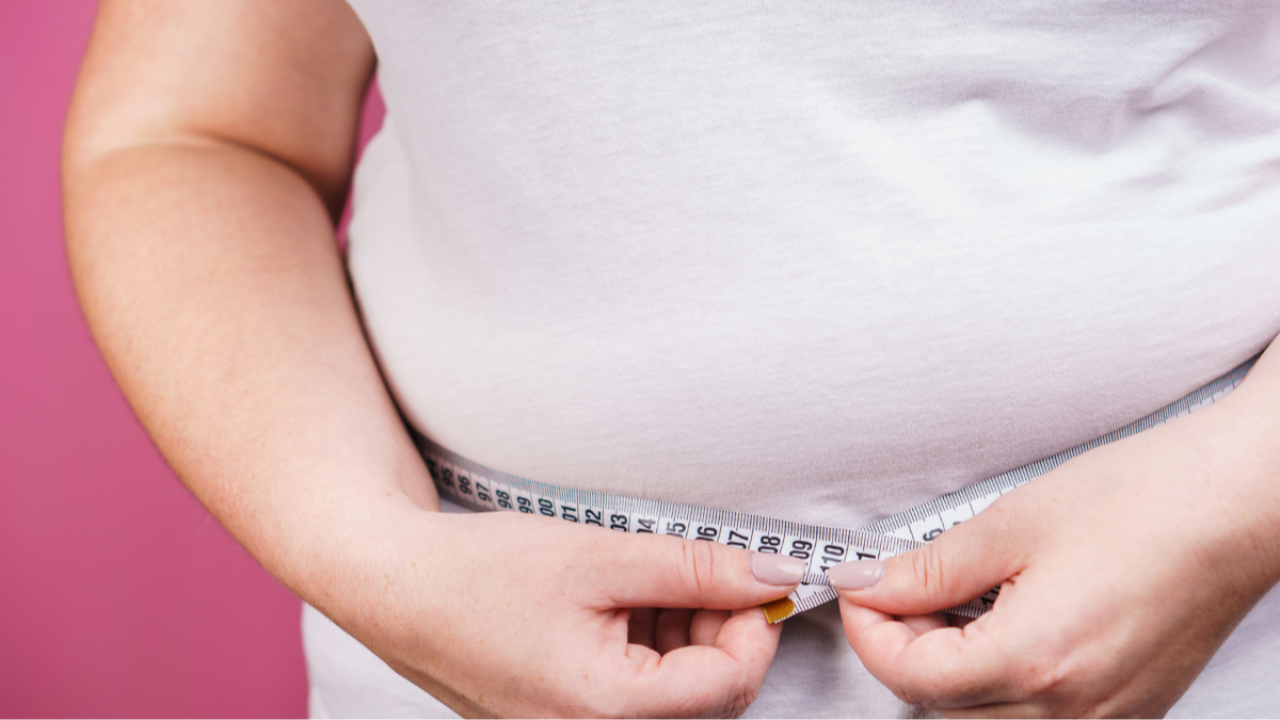
This is where people get uncomfortable, and honestly, this is where most people check out, because it forces a level of personal responsibility that almost nobody actually wants to take. Obesity is not random. It is not something that just happens to you. It is not something your body decided one day to do for no reason. It is a direct reflection of your inputs, your patterns, your habits, and your consistency over time. Not what you think you’re doing, but what you are actually doing.
And this is the part that hits hard. Most people are not aware of their actual reality. They are aware of their intention. They are aware of the version of themselves they identify with. But the body does not respond to intention. It responds to repeated behavior.
You will hear people say things like, “I don’t eat that much,” or “I eat pretty healthy,” or “I don’t understand, I’m doing everything right.” And when you actually break it down, when you actually look at a full, honest, tracked day, what you see is something completely different. You see extra calories coming in from oils, sauces, dressings, snacks, handfuls of things that “don’t count.” You see low movement, low intensity, inconsistent effort, emotional eating patterns, and then you see the justification layered on top of it.
This is where Tony Robbins talks about “strategies.” Everyone has a strategy for getting what they want, but most people also have a strategy for avoiding discomfort. And that avoidance strategy is what keeps them stuck. You say you want to lose weight, but your actual strategy is to stay comfortable. You want results, but you also want ease, indulgence, and no restriction. And those two things do not coexist.
Let’s get even more specific, because this is where people start to wake up.
If you are gaining weight, you are in a calorie surplus. That is not debatable. That is not opinion. That is physiology. Now, that doesn’t mean calories are the only thing that matter, because hormones, insulin sensitivity, inflammation, and food quality absolutely influence how your body processes those calories. But at the end of the day, if your weight is going up, your intake is exceeding your output over time.
So when someone says, “I can’t lose weight because of my hormones,” what I hear is, “I haven’t fully looked at my behavior.”
Because even in cases of hormonal imbalance, even in cases of PCOS, even in perimenopause, fat loss is still possible when the environment is corrected. It may require more precision. It may require more consistency. It may require deeper work. But it is not impossible.
The real issue is not that people can’t lose weight. It’s that they are not willing to do what is required consistently enough to create the outcome.
Hormones and Fat Storage: What’s Actually Happening
Now let’s go deeper, because this is where people start to understand how this all connects.
Your hormones absolutely influence fat storage, energy levels, and metabolism. But again, they are responding to your environment.
Let’s talk about insulin first, because this is one of the most important hormones when it comes to weight.
Insulin is a storage hormone. When insulin is elevated consistently, your body is in storage mode. That means it is storing energy, not burning it. Highly processed foods, refined carbohydrates, sugars, and constant snacking keep insulin elevated throughout the day. Your body never gets a chance to access stored fat.
This is where Paul Saladino’s approach makes sense. When you remove processed foods, remove inflammatory inputs, stabilize blood sugar, and focus on nutrient-dense animal foods with clean carbohydrates, insulin becomes more stable. Your body becomes more metabolically flexible. It can actually switch between using glucose and fat as fuel.
Now let’s layer in cortisol.
Cortisol is your stress hormone. When cortisol is chronically elevated, your body is in survival mode. It is not prioritizing fat loss. It is not prioritizing muscle building. It is prioritizing staying alive. And part of that survival response is holding onto energy, especially around the midsection.
So if you are:
• chronically stressed
• under-slept
• over-caffeinated
• emotionally dysregulated
Your cortisol is elevated, and that is directly impacting your ability to lose fat.
Now let’s talk about sex hormones.
Estrogen, progesterone, testosterone, these all play a role in body composition. For women in perimenopause, declining progesterone and fluctuating estrogen can create weight gain, water retention, and mood instability. For men, declining testosterone reduces muscle mass, lowers motivation, and impacts metabolism.
But here’s the part no one says clearly enough.
These hormones are influenced by:
• your nutrition
• your body fat levels
• your stress
• your sleep
• your movement
• your environment
They are not separate from your lifestyle. So again, when someone says, “It’s my hormones,” the real question is, “What are you doing that is affecting your hormones?”
PCOS, Perimenopause, Low Testosterone: The Deeper Truth
Let’s break this down more specifically, because these are the big ones people lean on.
PCOS
PCOS is often driven by insulin resistance. When insulin is high, it disrupts ovarian function and increases androgen production. That creates symptoms like irregular cycles, acne, weight gain, and difficulty losing fat.
So what is the solution?
Stabilize insulin.
That means:
• removing processed foods
• reducing sugar and refined carbs
• increasing protein and healthy fats
• improving metabolic health
This is exactly where an animal-based approach can be incredibly powerful, because it removes the inflammatory, insulin-spiking foods and replaces them with nutrient-dense, bioavailable nutrition.
Perimenopause
This is where cholesterol becomes critical.
Your body needs cholesterol to produce hormones. Progesterone, estrogen, cortisol, all of these are derived from cholesterol. If you are not consuming enough cholesterol and healthy fats, your body does not have the raw materials it needs to produce hormones properly.
And yet for years, women were told to avoid cholesterol, avoid red meat, eat low fat. That advice has contributed to the exact problems we are now seeing.
If you are in perimenopause and struggling with symptoms, one of the first things I look at is whether you are actually giving your body the nutrients it needs to produce hormones.
Eggs, red meat, healthy fats, these are not the problem. In many cases, they are part of the solution.
Low Testosterone
For men, low testosterone is becoming more common, and it is not just “aging.”
It is:
• poor diet
• lack of strength training
• chronic stress
• poor sleep
• exposure to endocrine disruptors
Testosterone requires:
• adequate protein
• healthy fats
• resistance training
• recovery
• a regulated nervous system
If you are not doing those things, your testosterone will reflect that.
The Loop No One Understands (But It Changes Everything Once You See It)
This is the part I want to drill into, because this is where everything clicks, and once you see it, you cannot unsee it. People say, “I feel like this because my hormones are out of balance.” And that sounds logical on the surface, but it’s actually backwards.
You are not feeling like this because your hormones are out of balance. Your hormones are out of balance because of what you are doing. And what you are doing is what is creating the symptoms.
So the real sequence is this:
You are doing things → that create hormonal imbalance → which creates symptoms → and then you blame the hormones.
And that is where people get stuck forever. Because if you think the hormones are the cause, you will try to fix the hormones directly. But if you understand that your behaviors are the cause, you will fix the behaviors, and the hormones will follow.
That is a completely different level of awareness.
And this is why I get so frustrated when I hear doctors say things like “sometimes it just happens” or “we don’t know why.”
That is not true.
It might be true that they don’t know why. But that does not mean there is no why.
Before You Say You Have a Hormone Problem, You Need to Earn That Statement
This is something I stand very firmly on.
Before you say, “I have a hormone problem,” you need to be able to say, with complete honesty, that you have done the following consistently and properly.
Not “kind of.” Not “most of the time.” Not “I try.”
Actually done it.
You need to ask yourself:
• Are you getting sunlight on your skin every single day?
• Are your vitamin D levels actually optimized naturally?
• Are you drinking enough clean, filtered water consistently?
• Are you sleeping properly, before midnight, consistently?
• Are you managing your stress and your mindset?
• Are you eliminating hormone disruptors from your life?
• Are you breathing properly and supporting your nervous system?
• Are you eating high-quality, nutrient-dense, animal-based foods?
• Are you avoiding processed foods, refined sugars, and stimulants?
• Are you exercising properly, including strength training?
• Are you tracking your food honestly?
• Are you actually in a calorie deficit if fat loss is your goal?
Because here’s the truth.
Most people will say yes to these.
But if you actually break it down, the answer is no.
The Honesty Problem (This Is Where People Get Caught)
This is one of the biggest issues I see, and it’s not intentional. People are not lying to others. They are lying to themselves.
They will say:
“I eat healthy.”
But they are not tracking:
• oils
• dressings
• nut butters
• snacks
• portion sizes
They will say:
“I walk every day.”
But:
• their steps are low
• their intensity is low
• their body is not adapting
They will say:
“I don’t eat that much.”
But they are:
• eating large meals at night
• snacking without awareness
• underestimating calories significantly
And then they say:
“I don’t know what’s wrong.”
Nothing is wrong. You’re just not seeing clearly.
The “I Deserve a Break” Trap (This Is a Pattern, Not Reality)
This one is huge, and this is where coaching becomes non-negotiable. The moment someone starts doing things properly, eating better, moving more, getting disciplined, a thought shows up:
“I deserve a break.”
“I’ve been good all week.”
“I should be able to relax.”
And this is where everything falls apart. Because that thought is not truth.
It is a pattern.
It is a strategy.
It is a learned behavior that keeps you exactly where you are.
Think about how backwards this is.
You are saying:
"I need a reward for taking care of myself.” And that reward is to deliberately harm yourself? That is insane when you actually slow down and look at it clearly. Taking care of yourself should not require a reward. It should be the reward. Feeling clear, energized, strong, regulated, confident, that is the reward. But for most people, it doesn’t feel that way. It feels like effort. It feels like discipline. It feels like something they have to force themselves to do.
And this is where it gets interesting. Because it doesn’t feel like effort because it is hard. It feels like effort because of how you are wired.
From an NLP perspective, this comes down to three core things:
your values
your subconscious programming
your limiting beliefs and identity
If your values are misaligned, everything feels heavy. If you say you value health, but your actual lived values are comfort, convenience, and immediate pleasure, you will constantly feel internal resistance. You will say you want one thing, but your behavior will reflect something else. That creates friction. That friction is what feels like effort.
Your subconscious mind is always moving you toward what feels familiar, not what is best for you. So if your baseline has been comfort over discipline, ease over growth, distraction over presence, then doing the opposite will feel wrong, even if it is right. That’s not because you’re broken. That’s because your nervous system and subconscious have been trained to associate comfort with safety. And anything outside of that feels like threat.
Now layer in limiting beliefs. If somewhere along the way you picked up beliefs like
“this is hard for me,”
“I’ve always struggled with this,”
“I’m not disciplined,”
“I start and stop,”
Your brain will constantly reinforce that identity. So now every time you try to show up differently, you are not just changing a habit. You are going against your identity. And that is why it feels exhausting. Because you are forcing behavior that does not match who you believe you are.
And here’s the part most people never understand. You are not actually fighting your habits. You are fighting your identity. That is why people can “know exactly what to do” and still not do it. Because knowing is conscious, but action is driven by the subconscious. This is exactly the work I do. I don’t just give you a plan and tell you to try harder. I look at what you actually value, not what you say you value, what your subconscious is wired to seek and avoid, what identity you are operating from, and what beliefs are running your behavior. And we change that.
Because when that shifts, something powerful happens. Taking care of yourself stops feeling like effort. It stops feeling like something you have to force. It starts feeling normal, natural, expected. It becomes who you are, not something you’re trying to do. And when that happens, consistency is no longer something you struggle with. It becomes automatic.
That’s the difference. That’s why some people “make it look easy.” It’s not because they’re more disciplined. It’s because they’ve aligned their identity, their values, and their subconscious with the outcome. And once you do that, you don’t need a reward for taking care of yourself. Because taking care of yourself is the reward.
This Is Why People Start and Stop Forever
This is the cycle:
You start → you feel motivated → you do well
You get uncomfortable → you justify → you break
You fall off → you feel guilty → you restart
And then you say:
“I can’t stay consistent.”
No.
You haven’t changed the pattern.
That’s different.
And this is where [subconscious patterns and identity work] actually matter, because you are not operating from logic.
You are operating from conditioning.
Your Body Is Talking to You (And You’re Ignoring It)
Your body is not random. It is constantly communicating with you.
Fatigue is communication.
Weight gain is communication.
Mood swings are communication.
Cravings are communication.
Hormonal imbalance is communication.
But instead of listening, most people suppress.
They medicate.
They ignore.
They override.
And then they say:
“My body is working against me.”
No.
Your body is trying to get your attention.
The Blunt Truth (And This Is Where You Either Shift or You Don’t)
Everything happening in your body is your responsibility. Not your fault in a shame-based way. But your responsibility in a power-based way. Because if it’s your responsibility, you can change it. If it’s “just your hormones,” you’re stuck. And I refuse to accept that people are stuck when I’ve seen too many people completely transform by changing their inputs, their habits, and their patterns.
Most People Don’t Actually Want the Truth — They Want Validation
This is probably the most controversial one, but it needs to be said. A lot of people don’t actually want to change. They want to feel better without changing. They want validation.
They want someone to say:
“It’s not your fault.”
“You’re doing everything right.”
“It’s just your hormones.”
Because that removes responsibility. But it also removes power. Because if it’s not your fault, you can’t change it. And I don’t believe that. I believe people are capable of far more than they think. But only if they are willing to be honest.
This Is Why I Do What I Do
Because this is not just about food.
This is not just about hormones.
This is about:
• how you think
• how you operate
• how you make decisions
• how you handle discomfort
• how you justify your behavior
This is about identity. And until you change that, nothing sticks. That’s why I don’t just give you a plan.
I help you:
• see what you’re actually doing
• break the patterns
• change the beliefs
• align your values
• regulate your nervous system
So this becomes who you are. Not something you’re trying to do.
My Perspective (And This Is Where I’m Different)
I don’t just look at your food.
I look at:
• your patterns
• your beliefs
• your identity
• your nervous system
• your environment
Because all of it matters. You can have the perfect plan, the perfect diet, the perfect strategy, and still fail if you don’t address what is underneath it. That’s why people come to me after trying everything. Because they finally realize it’s not about more information. It’s about changing how they operate.
Modern Medicine Is Designed to Manage Symptoms, Not Eliminate Them
This one needs to be said clearly, because people get defensive around it, but it’s true.
Modern medicine is incredible in emergency situations. It is incredible for acute care, trauma, life-saving interventions. But when it comes to chronic illness, hormone imbalance, obesity, autoimmune conditions, it is largely designed to manage symptoms, not eliminate root causes.
That’s why you get a diagnosis and a prescription in the same appointment.
That’s why when you ask, “Why is this happening?” you often hear, “Sometimes it just happens.”
And that’s the part I don’t accept.
Because if you understand how the body works, things don’t “just happen” in isolation. They are the result of inputs, environment, and patterns over time.
Now, does that mean there are rare, complex cases where deeper intervention is needed? Of course. But that is not the majority of what we’re seeing right now. What we’re seeing is a population that is:
• undernourished
• overfed
• overstimulated
• under-rested
• chronically stressed
And then being told that their body is the problem.
It’s not.
The environment is.
Coaching Is the Missing Piece Most People Don’t Realize They Need
Because this is not just about information. Most people already know what they should be doing.
They don’t do it. Why? Because of patterns. Identity. Beliefs. Strategies.
This is where limiting beliefs are running your life becomes real, because if you believe you “deserve a break” from taking care of yourself, you will sabotage your own progress every time.
This is why working with me is different. I don’t just give you a plan.
I help you:
• Identify your patterns
• Rewire your habits
• Change your identity
• Regulate your nervous system
• Align your values
So it stops feeling like effort and starts becoming who you are.
Final Truth (And You Can Sit With This or Change It)
If your hormones are off, your body is telling you something.
If your weight is increasing, your body is telling you something.
If your energy is low, your body is telling you something.
The question is not, “Why is this happening to me?”
The question is, “What am I doing that is creating this?”
Because once you answer that honestly, everything becomes changeable.
Everything happening in your body is feedback.
Not punishment. Not bad luck. Not random. Feedback.
And if you are willing to look at that honestly, without excuses, without defensiveness, without outsourcing responsibility, you can change everything. But if you keep blaming hormones without changing what’s creating the imbalance… Nothing changes.
If You’re Ready to Actually Fix This
If you’re reading this and something hit, good. That’s where change starts. You don’t need another plan. You don’t need another diet. You need to understand what you’re actually doing, what’s driving it, and how to change it properly. That’s the work I do. This is the work. Not surface-level fixes. Not quick solutions. Not more guessing. Real clarity. Real structure. Real change.
With clients locally in Barrie, Orillia, Simcoe County, Muskoka, and across the GTA, and also virtually anywhere in Canada or globally, I help people rebuild their health, their habits, and their entire relationship with their body from the ground up.
If you want to keep guessing, keep trying things, keep cycling, you can. If you want clarity, structure, and real change, then we start there. We get honest. We get clear. We fix the root. And when you do that, your body follows.
Tags: hormone imbalance, animal based diet, PCOS, perimenopause, testosterone, metabolic health, root cause healing, holistic nutrition